Table of Contents

COVID-19 science

see also:

Introduction

The SARS-CoV-2 virus

Major variants of concern or monitoring

Transmission

75% of droplets observed are moving at velocities less than 0.5 m/s and the motion is equally distributed in all the directions, which implies that they do not settle rapidly and may follow the ambient airflow pattern. These results points toward high aerosol generation, as the behaviour of these droplets is like airborne particles source: Clinical Infectious Diseases Sept 2020. Droplets and Aerosols generated by singing and the risk of COVID-19 for choirs
Viral stability outside of host cells

Host cell mechanisms

Host cell ACE2 expression

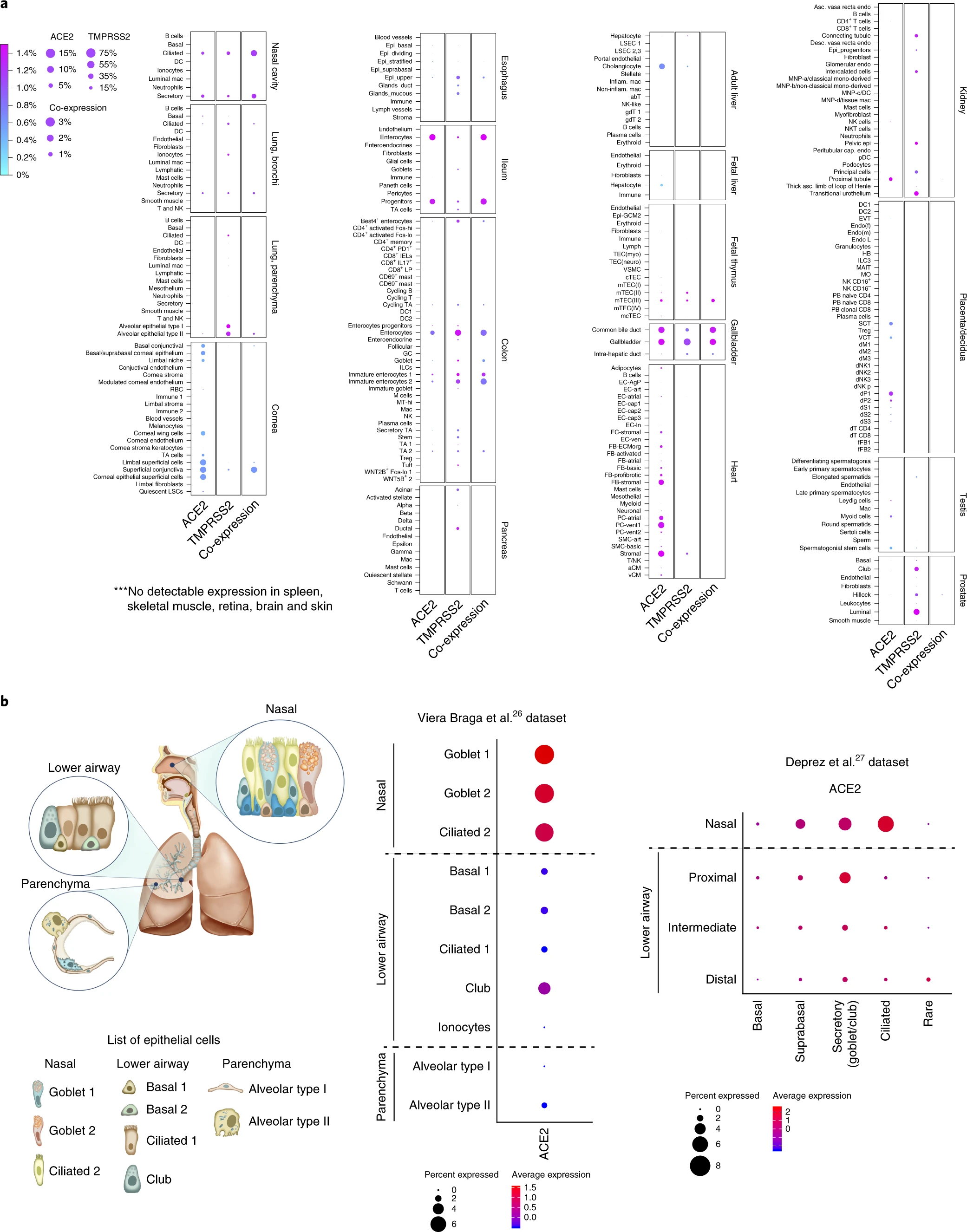
which cells express both ACE2 and TMPRSS2

up-regulation on ACE2 expression

potential other protein interactions

transmission to other species including pets

Risk factors for severe disease

genetic

co-morbidities

other factors

Prevention

Immune response and immunity

vaccination

re-infection

multi-dose BCG vaccination

Pathogenesis of illness

asymptomatic nasal carriage

mild URTI/LRTI illness +/- diarrhoea

endothelial cell infection and cardiovascular complications

severe disease and CRS

cytokine release syndrome (CRS)

cardiac pathology

secondary hemophagocytic lymphohistiocytosis (sHLH)

cell death and apotosis induced by the virus

long Covid syndrome

increased risks of long term illnesses

pregnancy

therapeutics

23)
Jeonghwan Youk et al. Three-dimensional human alveolar stem cell culture models reveal infection response to SARS-CoV-2. Cell Stem Cell; 21 Oct 2020; DOI: 10.1016/j.stem.2020.10.004
39)
Intensive Care National Audit and Research Centre (ICNARC